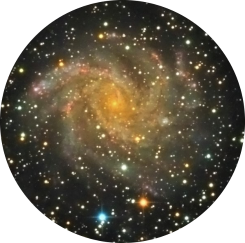
M101 SuperNova (27th-28th May)

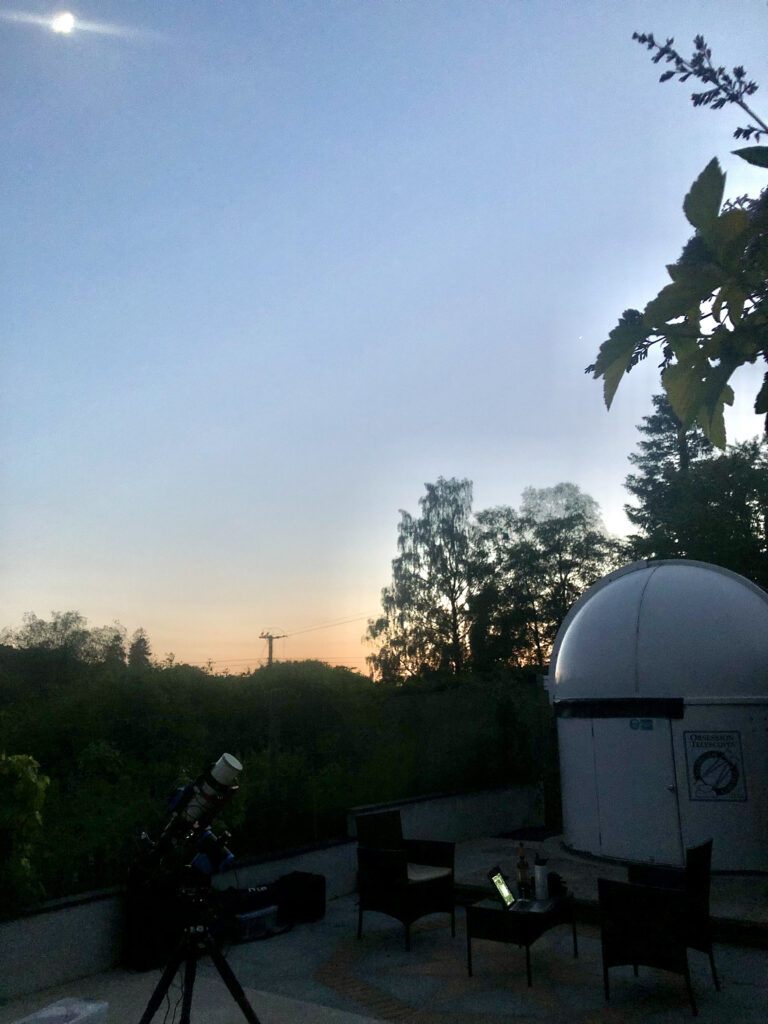
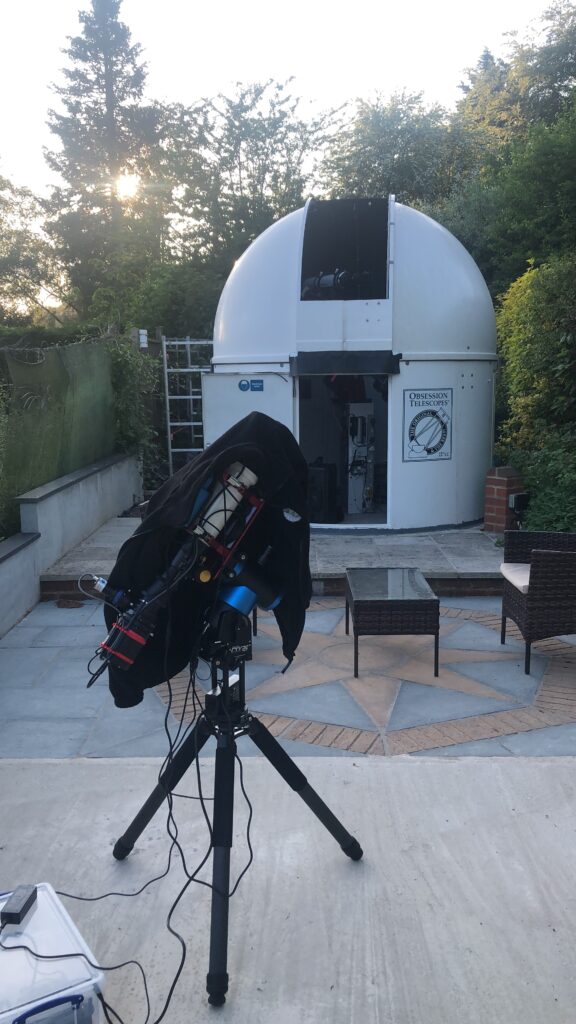
DSW invited me over to the IMT3 observatory for an imaging weekend to image M101 and the recent supernova2023ixf discovery. DSW was using the 12inch RDK and I decided to put the FSQ85 on the Pegasus NYX-101 to test out the setup ready for our Tenerife trip to Mount Teide.

I ran the QHY268C at high gain mode, gain 56, offset 30 and -20℃. I finally managed to cure the noise banding I was experiencing on the QHY268C but using a fully shielded high quality USB3 short length cable that I run from direct to a Pegasus UPBv2 that sits on top of the scope.

Although it’s mid summer and the Moon was bright and approaching full the phase, the sky conditions on the first night appeared to be okay at first sight. Before processing I decided to check on data quality via the blink module in PixInsight it was obvious that they were a lot of unusable subs due to high cloud and using them would have ruined the quality of any resulting stacked image.

Running the data stack of raw images through the PixInsight Subframe Selector to analyse the PSF SNR versus noise it clearly shows that I could only use 7 frames (35 minutes) didn’t drop below 0.08 from night one whilst all the data from night two should go straight into the bin along with most of night one 🙁
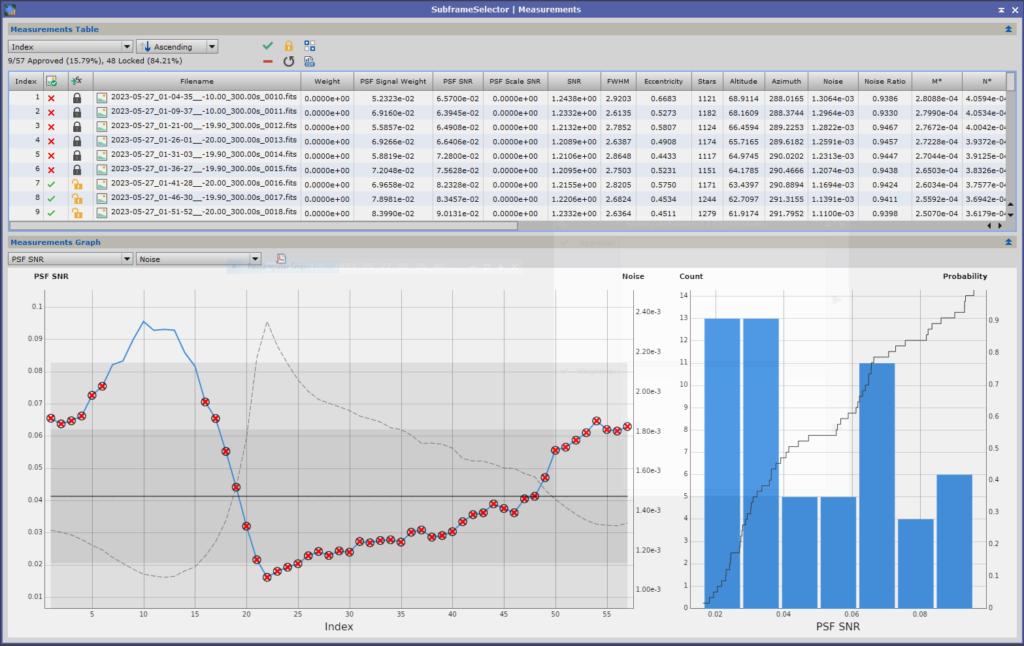
Pixinsight SubFrameSelector

Given I don’t have enough data to do the end result justice due to my poor PixInsight skills I decided to invert the images – I really should subscribe to Adam Block Studios (Shout out !)
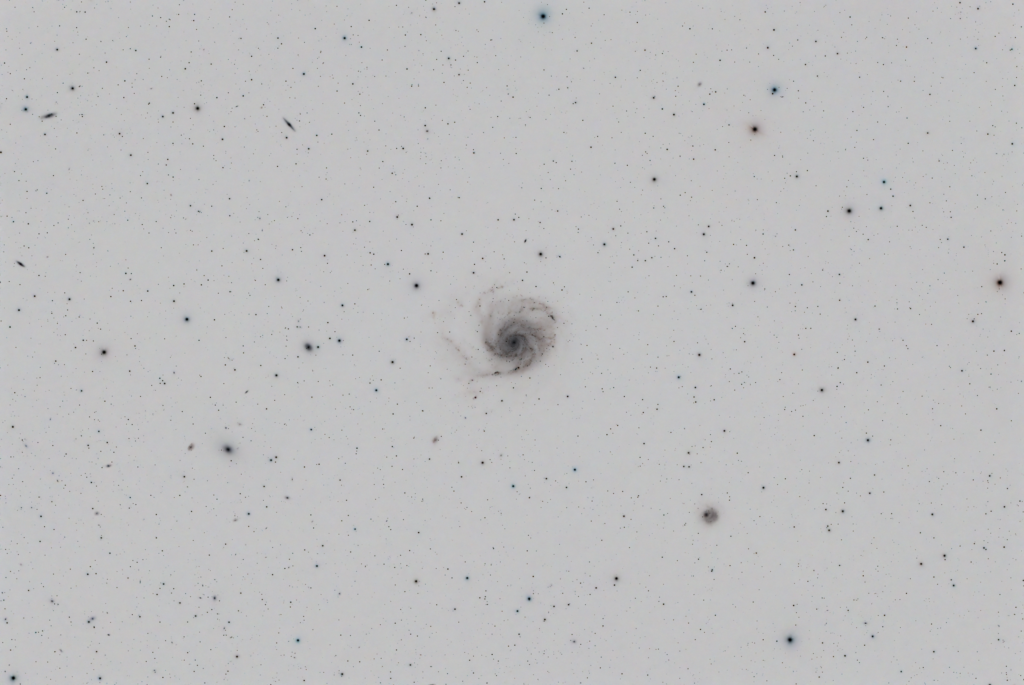
Inverted image of M101, supernova 2023ixf and surrounding area

Running the AnnotateImage Script labels the various galaxies in the image which I enjoy looking up to see which type they are, magnitude and how far away they are.
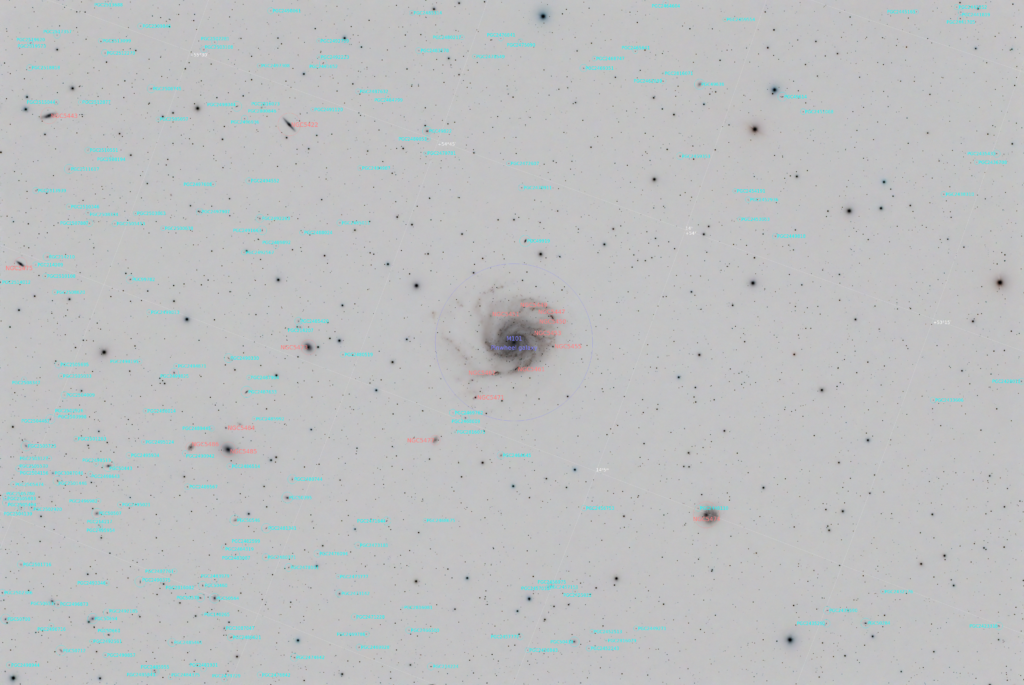
Annotated FoV for area around M101, supernova is not labelled

Zooming in to M101 to see the Supernova better, it is located to the right of NGC5461 and indicated by the two arrows.
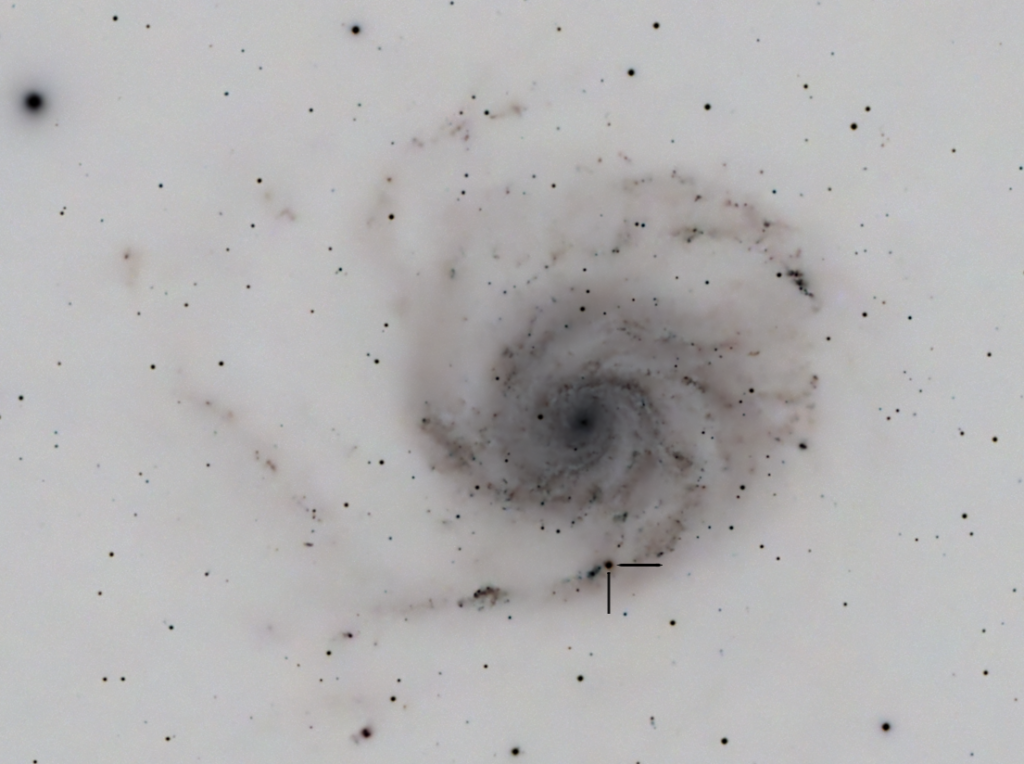
M101 with SN2023ixf indicated by the arrows

Light Curve

The AAVSO have a light curve plotted from measurements submitted by amateurs, just enter “SN 2023ixf” and submit here. It was still around 11th magnitude on 18th June but there does appear to be a slight decline in the brightness curve.
Viewing Report 27th May 2023

22:14 – 03:00

Takahashi FSQ85, QHY268C and Pegasus NYX-101

GingerGeek came round again tonight for another full night of imaging.

Focus position at 19,506 for Luminance at 22:30 hours.

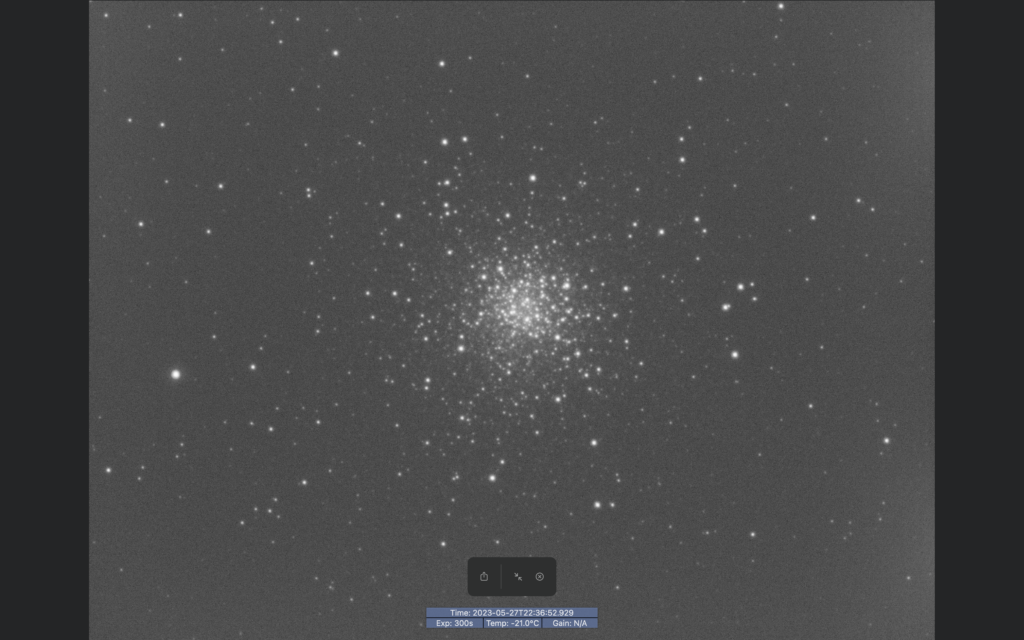
Started with M100 a galaxy in Coma Berenices. LRGB at 300s sub frames as I have not imaged this galaxy before. However I found this was too close to the Moon so I will revise another night. So I moved onto M10 for RGB, as I have luminance data from Spring 2020 I took 4-6 of RGB as M10 was then too low as it passed the Meridian.

Unfortunately due to the Moon and on reflection looking at the luminance data from April none of the data is of significant quality to be able to use, so I will have to reshoot.

Viewing Report 26th May 2023 (M101)

22:47 – 03:15

M101 for me this evening to try and get there RGB data in one night. GingerGeek has come round to test out his travel setup, he has a Takahashi FSQ85, QHY268C and the Pegasus NYX-101 harmonic mount.

Focused at 20,105 on Luminance so RGB will be 21,105

1 x 300s Red

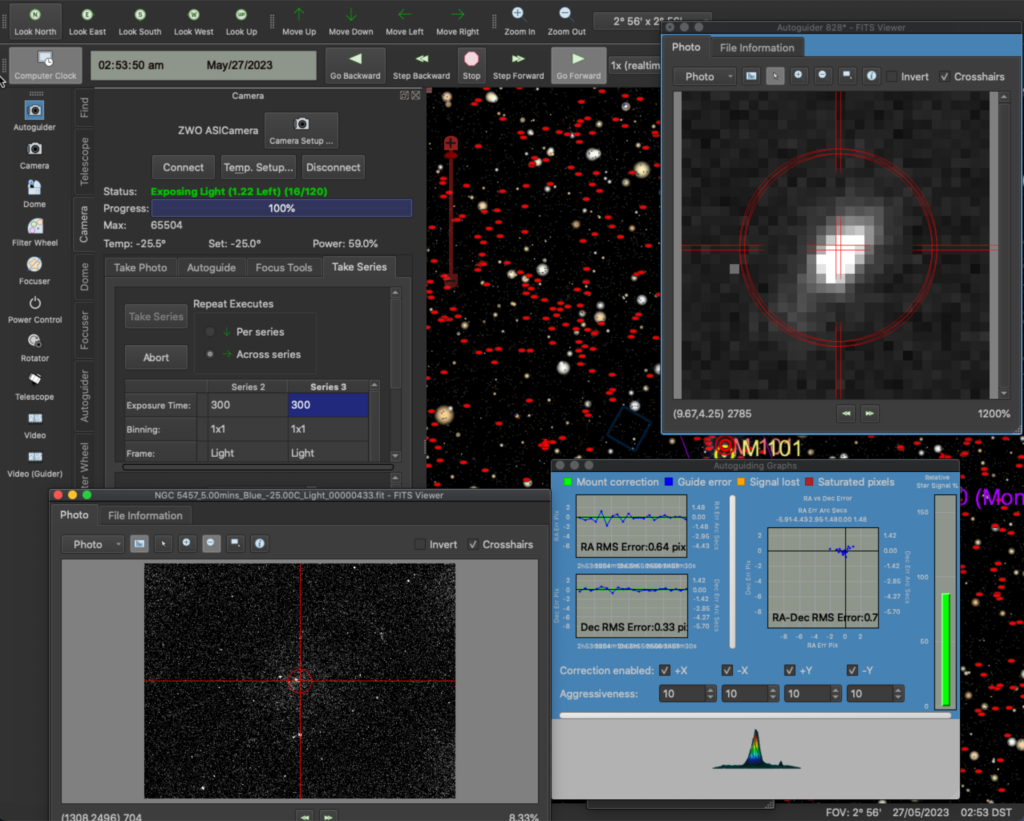
Taking 2 minute exposures for each colour at -25℃. I then realised 5 minutes is so much better. So at 1:30am I then started exposing at 5 minutes with the plan to combine both data sets. The SkyX worked brilliantly as can be seen below, looking after the guiding and image capture.

The main challenge I had early on was the the dome shutting unexpectedly. I will attempt to find out why over the next few months. The camera noise continues to be an issue but less so tonight so I think it may be USB related, again I will troubleshoot and check there cable lengths.

GingerGeek had a productive night troubleshooting a multitude of problems on his untested travel kit and was pleased with the results including taking his first image of a supernova in M101.

Viewing Report 20th May 2023

22:27 – 03:12

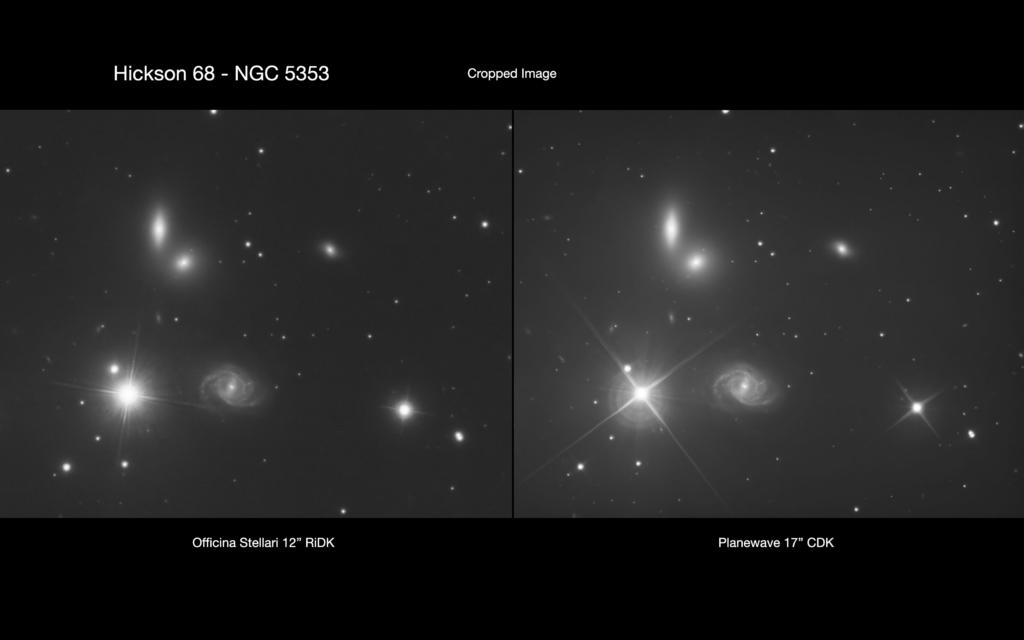
Imaging from IMT3b this evening using the 12″ CDK. Decided to test and see what my image scale would look like compared to Bob’s 17″ CDK. Bob had recently taken an image of Hickson 68 and in particular NGC 5353, a spiral galaxy in Canes Ventatici.

So I’m out and all is clear and calm, temperature is around 12℃ after a pleasantly warm day of 21℃. I am now shooting 1 minutes exposures as did Bob and I will take 70 of these. Of course to be comparable I would need at least 4 times the amount give the light grasp from Bob’s 17″.

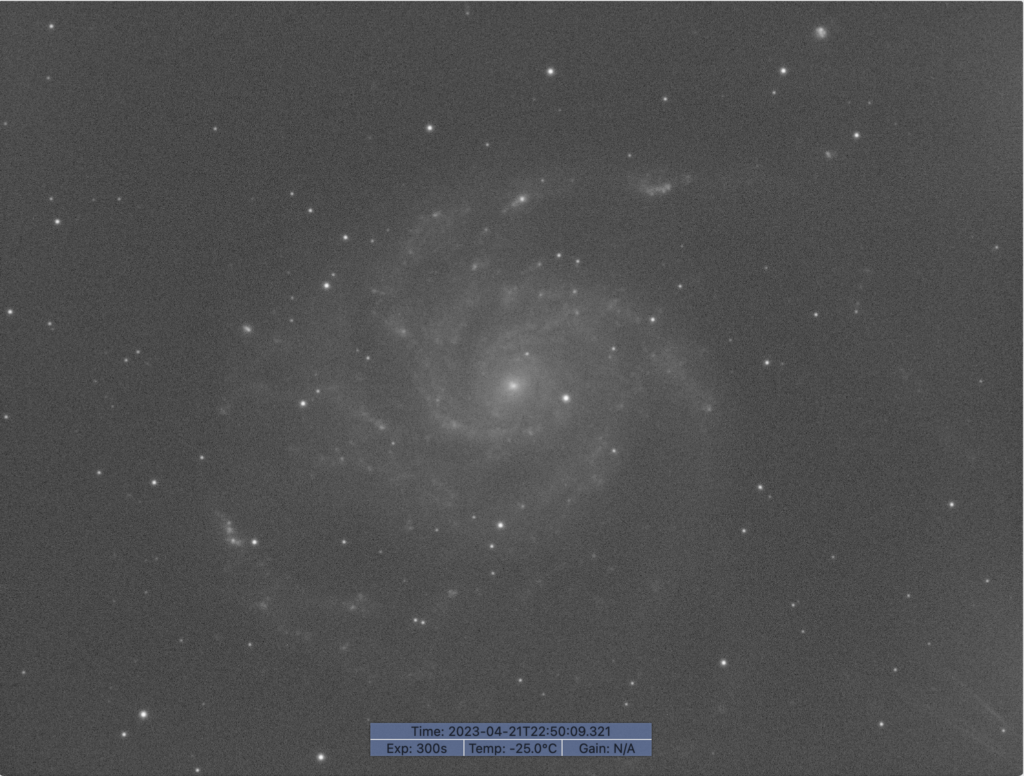
By 1.13am I had finished 70 x 60s exposures for NGC 5353 including flats and darks. Then I slewed to M101 to start collecting RGB frames, however I needed to get the camera rotated back to the right position. Firstly PixInsight’s plate solving script had gone from my install since the recent update so I need to fix that. So instead I used image link in TSX. Using the following process I managed to correct my FoV frame and then sync the rotator to the current view. I then opened the M101 image from the 21st April and used that as a reference to then rotate the rotator to align.

  1. Take a photo and Image Link it
  2. Rotate the FoV Indicator to match the position angle and synch it
  3. Unlink the image
  4. Open the original M101 photo
  5. Rotate the FoV Indicator to match the linked photo and tell the rotator to rotate

Finally got the imaging run on M101 started at 3am for RGB taking 2min subs. I remembered to move the focus position out by 1,000. So I went from luminance at 19,329 to Red 20,329

Need more flats and darks for M101 later tonight.